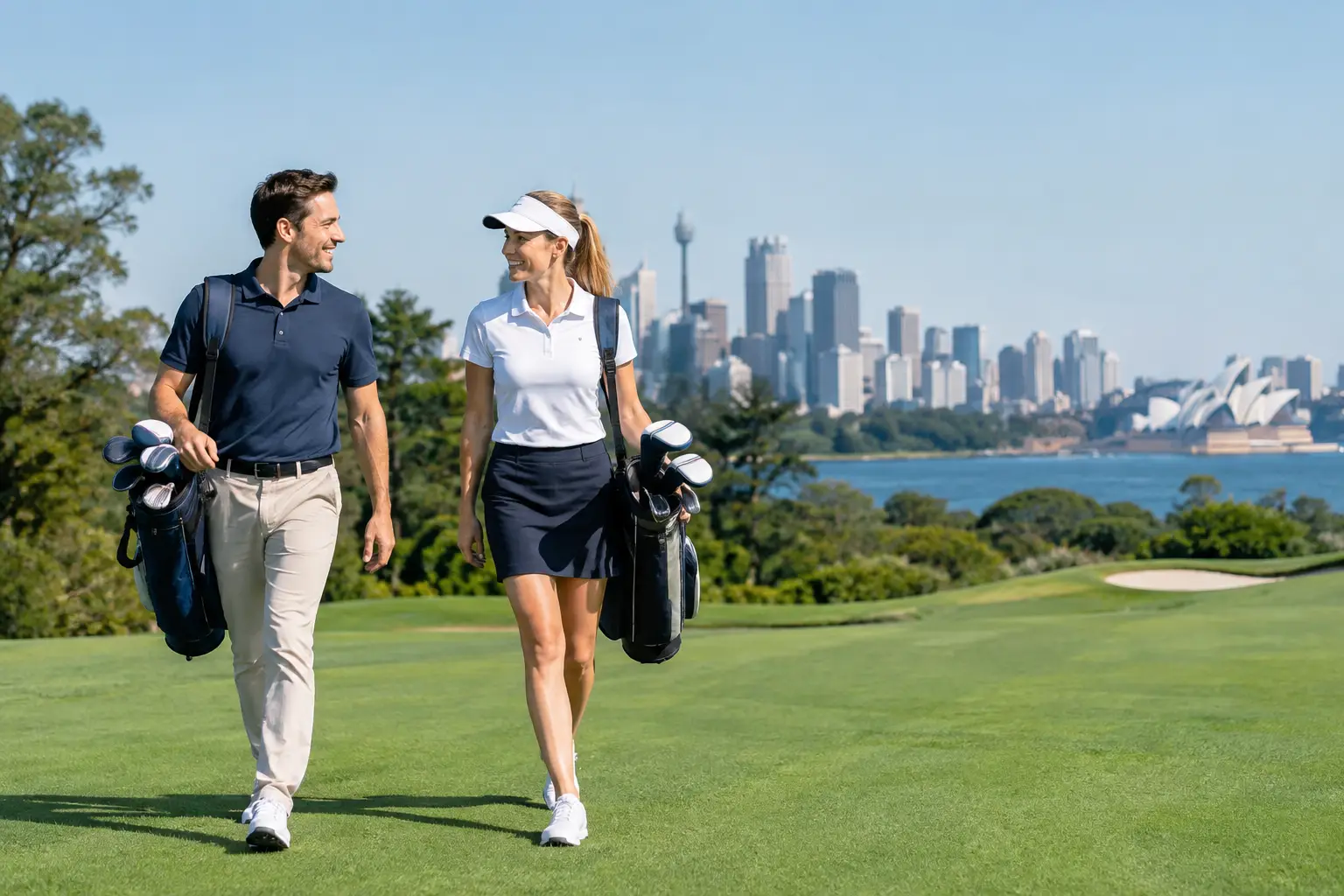
Turning up for a round in Sydney should feel exciting, not like a test in what to wear. This guide to golf dress etiquette makes the decision simple: choose clean, comfortable clothing made for movement, respect the venue’s standards, and dress for the conditions. Golf has become more relaxed in many ways, but a little care still goes a long way on the course and in the clubhouse.
A Guide to Golf Dress Etiquette: The Simple Rule
Golf attire sits somewhere between activewear and smart casual. You need to be able to swing freely, walk comfortably and cope with a change in weather, while looking neat enough to share the course and clubhouse with other players.
The exact standard varies between clubs, events and times of day. A casual nine holes with mates may be less formal than a competition round, corporate golf day or post-golf lunch. When in doubt, aim one step smarter than your usual weekend activewear. A collared polo, tailored shorts or trousers, and proper golf shoes or tidy athletic shoes will be right in almost every public-access setting.
The point is not to make golf feel exclusive. Dress etiquette helps keep the experience comfortable and considerate for everyone, from first-time players and juniors to regular members and event guests.
What to Wear on the Course
Shirts: neat, breathable and easy to move in
A collared polo is the safest choice for men and women, and modern golf polos come in lightweight fabrics that feel practical rather than formal. A neat collared shirt, mock-neck golf top or a modest, purpose-designed sleeveless golf top can also be suitable, depending on the club’s policy.
T-shirts, singlets, beachwear and overly casual gym tops are best left for another day. Even on a warm Sydney afternoon, a breathable polo offers sun coverage and looks at home from the first tee through to the bar afterwards. If you prefer layers, a quarter-zip, golf jumper or lightweight vest is an easy option that will not restrict your swing.
Bottoms: choose movement over fuss
Tailored shorts, golf trousers, chinos, skorts and golf dresses are all dependable choices. Look for fabrics with a little stretch and pockets that are useful without being bulky. For a relaxed social round, neat shorts are usually perfect in warmer weather.
Denim is commonly discouraged on golf courses, particularly during competitions or formal functions. So are trackpants, board shorts, cargo shorts and leggings worn as casual activewear rather than as part of a golf outfit. Leggings can work well beneath a golf skirt, skort or dress on cool mornings, provided the overall look remains neat and suited to play.
Length matters less than fit and practicality. Choose shorts, skirts and dresses that let you bend, walk and swing with confidence. If you are uncertain, a pair of tailored shorts or trousers is the no-fuss answer.
Shoes: protect your feet and the course
Golf shoes are ideal because they provide grip on slopes, wet grass and uneven lies. Spikeless golf shoes are particularly versatile: they are comfortable to walk in and generally work well in clubhouse areas too. Soft-spike shoes are also common, while metal spikes are not permitted at many clubs because they can damage greens and indoor flooring.
If you do not own golf shoes yet, clean athletic shoes with a stable sole are often acceptable for a casual round. Avoid thongs, sandals, heels and shoes with little traction. They are uncomfortable over 18 holes and can make a wet or hilly course unnecessarily risky.
Hats, sunglasses and sun protection
A cap, visor or broad-brimmed hat is a sensible addition under the Australian sun. Choose one that stays secure when you swing and does not block your view. Sunglasses with secure arms can help too, especially during late-afternoon play.
Sunscreen is part of good course preparation, not an afterthought. Apply it before you tee off, keep it in your bag, and reapply during the round. A light long-sleeve layer can be just as valuable as a hat on bright days.
Dress for Sydney’s Changing Conditions
Sydney weather can shift quickly, particularly around the harbour. A clear morning can turn breezy, a warm forecast can still bring a cool start, and rain may arrive halfway through the back nine. The best golf outfits are built in light layers.
Start with a polo or golf shirt, then bring a lightweight jumper, wind jacket or rain layer that fits comfortably over it. Golf-specific outerwear is helpful because it is cut to allow a full shoulder turn, but any neat, weather-appropriate jacket that does not hinder your swing can do the job. Pack a spare pair of socks if rain is forecast, and consider a towel for your hands and grips.
There is a trade-off between staying cool and staying covered. On a hot day, breathable fabrics and lighter colours feel better. On a cool day, a thin base layer and windproof top are often more useful than one heavy jumper. Comfort is not separate from etiquette: a player who is prepared for the conditions is less likely to be distracted or hold up the group.
The Clubhouse Has Its Own Cues
What works on the fairway is not always right for lunch, a presentation or an evening function. Most golfers can move from course to clubhouse without changing if their clothing is clean, tidy and dry. A polo with tailored shorts, trousers or a golf skirt is usually an easy fit for a casual meal or drink.
However, muddy shoes, wet rain gear and caps may not suit all indoor spaces. If you are attending a corporate day, celebration, presentation or private event, check the event details before arriving. The organiser may ask for smart casual attire after golf, which could mean changing out of golf shoes and bringing a fresh shirt or light jacket.
At Northbridge Golf Club, the appeal is as much about catching up over a meal or drink as it is about the round itself. Dressing with the whole visit in mind means you can move comfortably from the course to the social side of the club.
What Not to Wear, and Why
Golf dress codes are not about policing personal style. They are usually designed around safety, comfort, course care and a shared standard that suits a social sporting venue. The items most likely to cause a problem are:
- thongs, slides, sandals or unstable footwear
- swimwear, singlets and beach-style clothing
- dirty, torn or heavily distressed garments
- clothing with offensive slogans or graphics
Very casual denim, gym wear and cargo styles may also be unsuitable, depending on the club and event. If your outfit could be worn straight to the beach, the gym or a messy working bee, it is probably not the best choice for golf.
For First-Time Golfers, Lessons and Social Rounds
You do not need a full golf wardrobe before your first lesson or casual booking. Start with what you may already own: a clean polo or collared top, chino-style shorts or trousers, and comfortable athletic shoes. Add a hat, sunscreen and a light layer, then focus on enjoying the game.
For a lesson, range session or beginner-friendly round, functionality matters most. Your coach needs to see how you move, so avoid oversized hoodies, restrictive jackets or anything that makes you self-conscious about your swing. As you play more often, you will quickly learn what fabrics, fits and shoes suit your game.
Women and junior golfers should feel just as free to choose practical, comfortable course clothing without trying to match an outdated idea of what golfers must wear. Modern golf style offers plenty of options, from skorts and dresses to trousers, shorts and performance tops. The best outfit is one that meets the venue’s expectations and lets you play with confidence.
Corporate Days and Group Bookings
A corporate golf day often calls for a little more planning. Branded polos are popular, but make sure they are comfortable and appropriate for the forecast. If your group will have presentations, dining or networking after the round, pack a change of shoes and a smart casual layer rather than assuming golf gear will cover every part of the day.
Group organisers can make things easier by sharing a short dress note in advance. Mention collared shirts, tailored shorts or trousers, proper footwear, hats and wet-weather layers. This is especially helpful for guests who do not play often and may otherwise arrive worried they have missed an unspoken rule.
Before any visit, check the club’s current dress requirements and the details on your booking confirmation. Standards can differ for the course, practice areas, dining spaces and special events.
A well-chosen golf outfit should fade into the background once you reach the tee. Dress neatly, prepare for the weather and give yourself room to swing, then let the walk, the views and the good company take care of the rest.